Daily AI newsLatest edition
Thursday, November 26, 2026
The big AI labs' announcements, summarised every day in plain words. The 3 worth knowing first, then the rest, always with the official source.
Today's top 3

ANSM warns against using AI for medical advice
Why it matters: Patients risk medication errors and overdoses by using AI for medical advice.
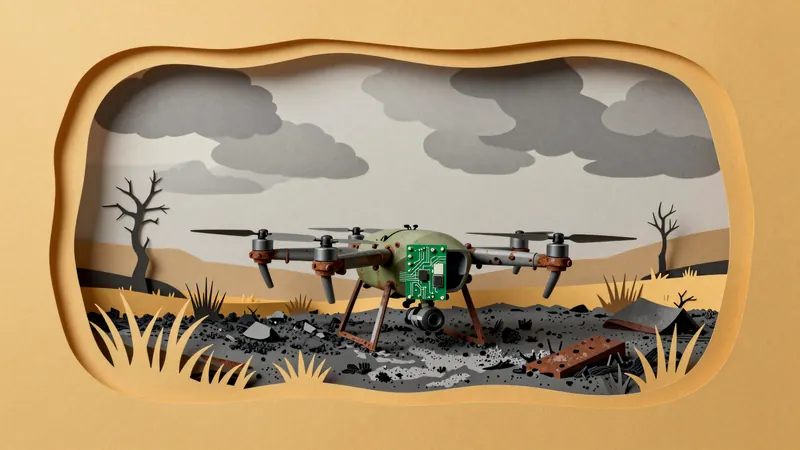
Nvidia chips power autonomous Russian weapons in Ukraine
Why it matters: Sanctioned Russian weapons can now target autonomously using consumer-grade AI chips.

OpenAI faces lawsuit after ChatGPT advice led to eviction
Why it matters: Incorrect legal advice from ChatGPT led to a user's eviction from their home.
Read the explainerSource: Les Numériques(opens in a new tab)
The rest of the day
OpenAI merges Chat and Work experiences in ChatGPT(opens in a new tab)
The company is introducing a single usage meter for both Chat and Work functions. While most subscribers are unaffected, heavy users might hit their limits sooner, though the Instant model remains unlimited.
Meta Muse helps user save over 3,000 dollars(opens in a new tab)
A Canadian user saved more than 3,000 dollars in two weeks by using Meta's Muse AI agent to negotiate a truck purchase and lower service bills. However, companies like Amazon are blocking these AI agents from their sites.
Bundeswehr AI drones encounter legal challenges over international law(opens in a new tab)
An internal Bundestag report suggests that autonomous kamikaze drones may be illegal. The AI systems can strike targets without communication, preventing soldiers from stopping attacks if civilians enter the zone.
Nothing reveals AI Ear Note earbuds(opens in a new tab)
The Ear Note earbuds and their charging case will launch on December 8th. The case can record and transcribe conversations, while a companion app manages the AI-generated summaries.
Meta integrates Muse AI into Instagram private messages(opens in a new tab)
Meta is deploying its Muse AI assistant within Instagram direct messages on iOS and Android. The tool helps users organize content, find information, and make purchases, starting in five countries including the US and Japan.
Pinterest lets parents limit AI content for teens(opens in a new tab)
Pinterest added parental controls that allow users to restrict the amount of AI-generated content their teenagers see in feeds. This update accompanies existing options to manage notifications, comments, and advertisements.
Anthropic CEO Dario Amodei rejects AI governance of society(opens in a new tab)
Dario Amodei called the idea of surrendering human free will to AI systems absurd. He argues that political decisions must stay with humans through democratic processes to avoid a form of autocracy.
Tidal bans fully AI-generated music(opens in a new tab)
Starting December 9, the streaming platform will reject and remove songs created entirely by AI. This decision follows findings that 43% of recently delivered tracks were AI-generated, with most receiving no plays.
Nvidia faces possible credit rating downgrade by S&P(opens in a new tab)
S&P Global Ratings may lower Nvidia's rating to AA- because of governance concerns and heavy reliance on CEO Jensen Huang. Such a downgrade could raise borrowing costs for the company.
NVIDIA releases tools to improve Nemotron 3.5 Parse(opens in a new tab)
NVIDIA is providing synthetic datasets and training recipes for its Nemotron 3.5 Parse model, which converts document images into structured data. The update includes a reinforcement learning method that significantly reduces output errors and new architecture for faster processing.
Seramount finds Gen Z is the most AI-averse generation at work(opens in a new tab)
Younger workers show the lowest interest and utility in using AI for their jobs compared to older generations. This skepticism is linked to a difficult job market and fears that the technology could worsen unemployment for entry-level roles.
Observatoire de l’infobésité et de la collaboration numérique warns AI(opens in a new tab)
A study shows received emails rose by 6%, averaging 169 per week. While generative AI summarizes data, it also creates more content, which may increase workloads and weaken professional collaboration.
Ai2 identifies key trust factors for AI agents in science(opens in a new tab)
Interviews with 17 scientists reveal that trust in AI agents depends on validation, privacy, objectivity, accountability, and transparency. While researchers welcome automating repetitive tasks, they insist that humans must remain responsible for verifying results and following ethical norms.
England and Wales courts report undisclosed AI use in 25 cases(opens in a new tab)
At least 25 legal cases were impacted by the secret use of AI by lawyers, police, and claimants. Judges encountered fabricated statutes, fake case law, and hallucinations in proceedings, including a high court tax dispute.
Google Gemini makes professional phone calls for US users(opens in a new tab)
The assistant now contacts businesses to book appointments or compare prices in the United States. Additionally, new app code suggests a future feature to create custom AI voices via written descriptions.
Meta launches Muse AI assistant in five countries(opens in a new tab)
The new AI agent can handle shopping, bookings and negotiations with user permission. Some employers are concerned that staff might connect the tool to company emails and private databases.
Microsoft explains how state hackers employ the ARTEX AI system(opens in a new tab)
The ARTEX framework allows actors from China and North Korea to automate cyberattacks using specialized AI agents. Microsoft warns these operations run at machine speed and suggests using honeypots to deceive the autonomous tools.
Nvidia support from Donald Trump is risky, says historian(opens in a new tab)
Historian Harold James argues that Donald Trump's actions to protect Jensen Huang from a crash are dangerous. He suggests this form of interventionism is riskier than the bank bailouts following the 2008 crisis.
Christopher Dembik compares AI impact to the industrial revolution(opens in a new tab)
Investment strategy advisor Christopher Dembik suggests AI will have a scale similar to the industrial revolution. However, he believes the effects on economic growth and jobs will be slower and less sudden than expected.
Nvidia agrees to pay 290 million dollars to settle lawsuit(opens in a new tab)
Nvidia will pay 290 million dollars to end a shareholder lawsuit from 2018. The company was accused of concealing how much cryptocurrency mining drove its graphics card sales between 2017 and 2018.
Nvidia halts server shipments to four Asian nations(opens in a new tab)
The company told partners like Dell and Supermicro to stop deliveries due to stricter US export rules. These controls intend to block Chinese firms from accessing AI hardware through foreign cloud providers.
OpenAI and other labs may hold secret cryptography breakthroughs(opens in a new tab)
Computer scientist Scott Aaronson suggests AI laboratories possess explosive discoveries regarding encryption systems. This follows various mathematical achievements by OpenAI and Anthropic, including work on the Riemann hypothesis.
Next launches Safari version of its AI site alert tool(opens in a new tab)
The media outlet Next has released version 3.1 of its extension, now compatible with Safari on macOS. The tool flags over 20,000 French and 2,000 English websites that use generative AI for their content.
AI may destroy wealth instead of just redistributing it(opens in a new tab)
Research suggests AI can eliminate economic value by removing quality signals in job applications and creating content that no one consumes. This wasteful production occurs because AI lowers costs without increasing the public's available attention.
Hugging Face launches llama.cpp benchmark dashboard for AMD(opens in a new tab)
The new tool allows developers to track local inference performance on AMD Ryzen and Radeon hardware. It measures prompt processing and text generation speeds across various models and quantizations.
Hugging Face launches guide on building multi-agent swarms(opens in a new tab)
Hugging Face started a blog series to help users build and train multi-agent systems. The project explores whether agent communication actually improves performance or simply increases the amount of compute used.
OpenAI claims a theoretical limit for AI matrix calculations(opens in a new tab)
OpenAI asserts that matrix multiplication cannot be performed faster than a specific theoretical limit, ruling out a long-hoped-for exponent of 2. While an algorithm reaching this limit has been replicated by others, the claim regarding the lower bound lacks external peer review.
ANSM warns that AI chatbots do not replace doctors(opens in a new tab)
The French drug safety agency alerts patients to be cautious with health-specialized AI tools from OpenAI and Anthropic. Between 2024 and 2026, the agency tracked eight medication errors caused by AI, including one hospitalization and several overdoses.
OpenAI fixes billing bug that reduced usage limits(opens in a new tab)
A pricing error gave GPT-6.2 users incorrect discounts, meaning Astra and Sol users now reach their limits up to 40% faster. OpenAI is offering an extra reset to subscribers and free Fast Mode for business users as compensation.
Anonymous AI leader warns that safety is being sidelined(opens in a new tab)
A senior executive at a major tech company claims that profit and speed now outweigh safety and privacy. The author argues that the industry's culture of competition makes ethical hesitation a luxury companies no longer afford.
Palantir AI coordinates Atlantic Alliance defense simulation(opens in a new tab)
Allies of the Atlantic Alliance used Palantir's artificial intelligence to manage a full-scale territory defense exercise on October 30. The event took place at the Adazi base in Lettonie.
OpenAI model helps Stanford physicist study black holes(opens in a new tab)
Venkatesa Chandrasekaran published a theory on quantum gravity that recovers Stephen Hawking's black hole formula. The researcher spent months using OpenAI's GPT-6 Astra model to develop several calculations and proofs.
XPeng plans to sell its IRON robot by 2027(opens in a new tab)
The Chinese carmaker will launch a humanoid robot priced between 15,000 and 40,000 euros. After a trial in dealerships, the machine will be sold to businesses starting in the second quarter of 2027.
Meta declines UK regulator's request to test Muse(opens in a new tab)
Meta refused a proposal from the Financial Conduct Authority to jointly test its Muse personal agent before its UK launch. The regulator is concerned about how autonomous agents handle payments and the potential risks for consumers with low AI literacy.
Moonshot AI seeks Google and Meta data after US blocks(opens in a new tab)
Moonshot AI is turning to models from Google and Meta for training because OpenAI and Anthropic blocked data scraping. These changes, combined with US chip restrictions, are delaying the release of new flagship models until 2027.
Source: The Decoder(opens in a new tab)Google, DeepMind & GeminiMeta
CXMT and YMTC struggle to produce HBM memory for AI(opens in a new tab)
Chinese manufacturers CXMT and YMTC reported record profits on classic memory in 2026. However, US sanctions and low industrial yields prevent them from mass-producing HBM memory for AI chips before 2028.